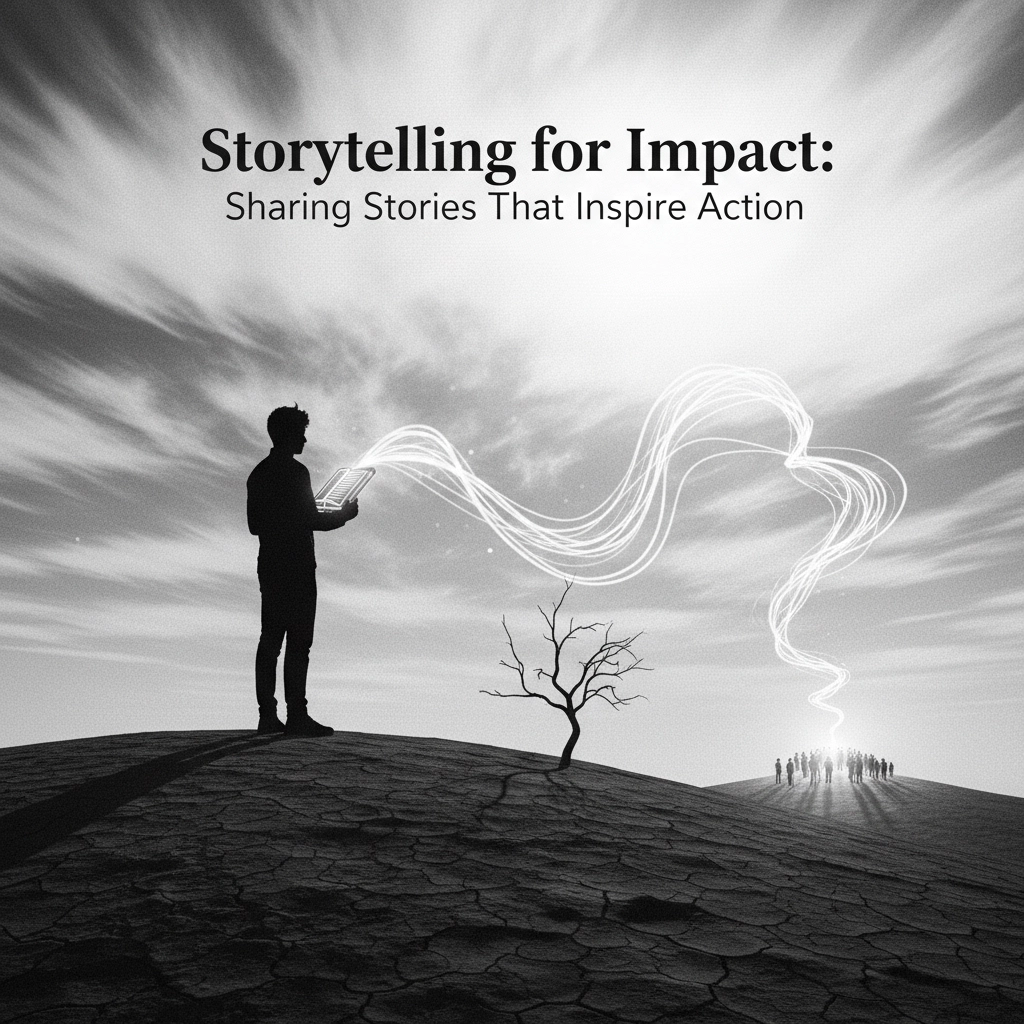
In the world of nonprofit work and community building, data tells us what happened: but stories tell us why it matters. While statistics can prove your impact, stories inspire people to care, connect, and take action. When done right, storytelling transforms passive observers into passionate advocates, turning your mission from something people understand into something they feel compelled to support.
The power of storytelling lies in its ability to create emotional connections. Unlike spreadsheets full of metrics or annual reports packed with achievements, stories engage both heart and mind. They help people see themselves in your work, understand the real human impact behind the numbers, and feel motivated to be part of the solution.
Why Stories Drive Action More Than Data Alone
Research shows that people are far more likely to donate to a single identified person than to a statistical group, even when the group represents a larger need. This phenomenon, known as the "identifiable victim effect," demonstrates why personal narratives are so powerful in nonprofit communications.
When you share the story of Maria, a single mother who gained job skills through your program, people connect emotionally. When you add that Maria is one of 847 participants with a 78% success rate, you provide the credibility that data brings. Together, they create a compelling case that moves people to act.

Stories also make complex issues accessible. Climate change, poverty, education inequality: these are massive, sometimes overwhelming challenges. But when you tell the story of one community garden that's teaching kids about nutrition while reducing food insecurity, you make the issue tangible and the solution achievable.
The Core Elements of Impactful Storytelling
Every powerful impact story contains four essential elements that work together to create a complete narrative arc:
The Before State sets the scene by showing where your protagonist started. This isn't about creating pity: it's about establishing context and helping your audience understand the challenge. Whether it's a person facing barriers to employment, a community dealing with environmental issues, or students lacking access to quality education, paint a clear picture of the starting point.
The Journey reveals the obstacles and challenges faced along the way. This is where you show the real difficulty of change, the setbacks encountered, and the persistence required. The journey makes the eventual transformation meaningful because it shows that change wasn't easy or automatic.
The Intervention describes how your organization provided support, resources, or opportunities. Importantly, your organization isn't the hero here: you're the guide who helped the real hero (the person or community) on their journey. This distinction keeps the focus on impact rather than self-promotion.
The After State demonstrates the transformation that occurred. This is where you show both the measurable change and the human meaning behind it. Instead of just saying someone got a job, describe how stable employment allowed them to move to a safer neighborhood, help their children with homework, or pursue further education.
Choosing Your Story's Focus
Not every story needs to follow the same pattern. Different types of stories serve different purposes in your communication strategy:
Individual transformation stories work well for donor communications because they show direct impact. These stories follow one person's journey from challenge to success, making it easy for supporters to see how their contributions make a difference.
Community change stories are powerful for grant applications and partnership proposals because they demonstrate broader impact. These narratives show how your work ripples outward, affecting not just direct participants but entire neighborhoods or communities.
System change stories appeal to policy makers and institutional funders because they show how your work addresses root causes. These stories connect individual experiences to larger patterns and demonstrate how local solutions can inform broader change.

Innovation stories attract media attention and thought leaders because they highlight new approaches or unexpected solutions. These narratives focus on creativity, problem-solving, and lessons learned that others might apply.
Crafting Authentic Narratives
Authenticity is non-negotiable in impact storytelling. Your audience can sense when stories are manufactured or exaggerated, and inauthentic narratives damage trust. Here's how to ensure your stories ring true:
Start with real experiences. The best impact stories come from actual participants, beneficiaries, staff, or volunteers. Spend time listening to these voices, asking open-ended questions, and understanding their perspectives. What surprised them? What was harder than expected? What made the difference?
Use specific details. Generic statements like "the program helped many people" pale in comparison to specific details like "After three months in our job training program, James landed a position as a pharmacy technician, increasing his income by $18,000 annually." Specificity creates credibility and helps readers visualize the impact.
Include challenges and setbacks. Real change is rarely linear. Stories that acknowledge difficulties, false starts, or ongoing challenges feel more honest than narratives that suggest everything went smoothly. These complications also make eventual success more meaningful.
Let people speak for themselves. Direct quotes from participants, beneficiaries, or community members add authenticity that no amount of third-person description can match. Their own words carry emotional weight and provide perspectives you might miss.
Balancing Dignity and Impact
One of the biggest challenges in nonprofit storytelling is sharing impactful narratives while preserving the dignity and privacy of the people you serve. This balance is both ethical imperative and practical necessity: stories that exploit or sensationalize human experience ultimately backfire.
Focus on strength, not just need. While it's important to establish why your work is necessary, avoid narratives that portray people as helpless victims. Instead, highlight agency, resilience, and capacity. Show how your organization amplified existing strengths rather than rescuing someone.
Obtain informed consent. Make sure people understand how their stories will be used, where they'll be shared, and what the potential consequences might be. This is especially important when working with vulnerable populations or sensitive situations.
Respect privacy boundaries. Some details don't need to be shared publicly. You can tell a powerful story about someone overcoming substance abuse without revealing specific details about their addiction. Focus on the elements that serve the story's purpose.

Share decision-making power. When possible, involve story subjects in how their narratives are told. Let them review drafts, choose which details to include, or even co-write their stories. This collaborative approach often leads to more powerful narratives while ensuring dignity.
Making Stories Actionable
The goal of impact storytelling isn't just to make people feel good: it's to inspire specific actions. Every story you tell should have a clear purpose and a corresponding call to action that gives your audience a meaningful way to respond.
Match the story to the ask. If you're seeking monthly donors, tell stories that show ongoing impact over time. If you're recruiting volunteers, focus on stories that highlight how volunteers make a difference. If you're advocating for policy change, share narratives that demonstrate why current systems fall short.
Make the connection explicit. Don't assume your audience will automatically know how to help. If Maria's story demonstrates the value of job training programs, explicitly explain how donations support program expansion, how volunteers contribute to success, or how advocacy can remove policy barriers.
Provide multiple engagement levels. Not everyone can make a major gift or commit to long-term volunteering, but most people can take some action. Offer a range of ways to get involved, from sharing the story on social media to attending an event to learning more about the issue.
Measuring Story Impact
Like any other aspect of your work, storytelling benefits from evaluation and improvement. Track how different types of stories perform across various platforms and audiences:
Engagement metrics show which stories resonate. Look at shares, comments, time spent reading, and click-through rates to understand what captures attention. Stories that generate discussion often indicate strong emotional connection.
Conversion rates reveal which narratives drive action. Track how stories perform in fundraising campaigns, volunteer recruitment, or newsletter sign-ups. Stories that consistently lead to action become valuable templates for future communications.
Audience feedback provides qualitative insight into story impact. Pay attention to comments, emails, and conversations that stories generate. What questions do people ask? What emotions do they express? How do they connect the story to their own experiences?

Scaling Your Storytelling
As your organization grows, you'll need systems for consistently collecting, crafting, and sharing impactful stories. This requires both infrastructure and culture change:
Build story collection into your programs. Train staff to recognize story opportunities, ask good questions, and document narratives as they unfold. Make storytelling part of regular program activities rather than an afterthought.
Create story banks. Develop a system for organizing and storing stories by theme, audience, or type of impact. This makes it easier to find the right story for specific communications needs and ensures good stories don't get lost.
Train multiple storytellers. While having dedicated communications staff is valuable, the best stories often come from program staff, volunteers, or participants themselves. Provide training on ethical storytelling practices and basic narrative techniques.
Develop story formats. Create templates and guidelines for different types of stories: social media posts, newsletter features, grant narratives, or website testimonials. Consistent formats make stories easier to produce while maintaining quality.
The Ripple Effect of Good Stories
When done well, storytelling creates impact beyond immediate fundraising or volunteer recruitment. Good stories change how people think about issues, inspire other organizations, and contribute to broader social change narratives.
Your stories become part of how communities understand their own challenges and possibilities. They provide language and frameworks that advocates can use. They offer hope and models that other organizations can adapt.
Most importantly, good stories honor the experiences of the people you serve while inspiring others to join the work of building stronger, more equitable communities. In a world often overwhelmed by problems, stories remind us that change is possible: one person, one community, one story at a time.
Ready to strengthen your storytelling? Visit our resources page for templates, guides, and tools to help you craft compelling narratives that drive real impact.